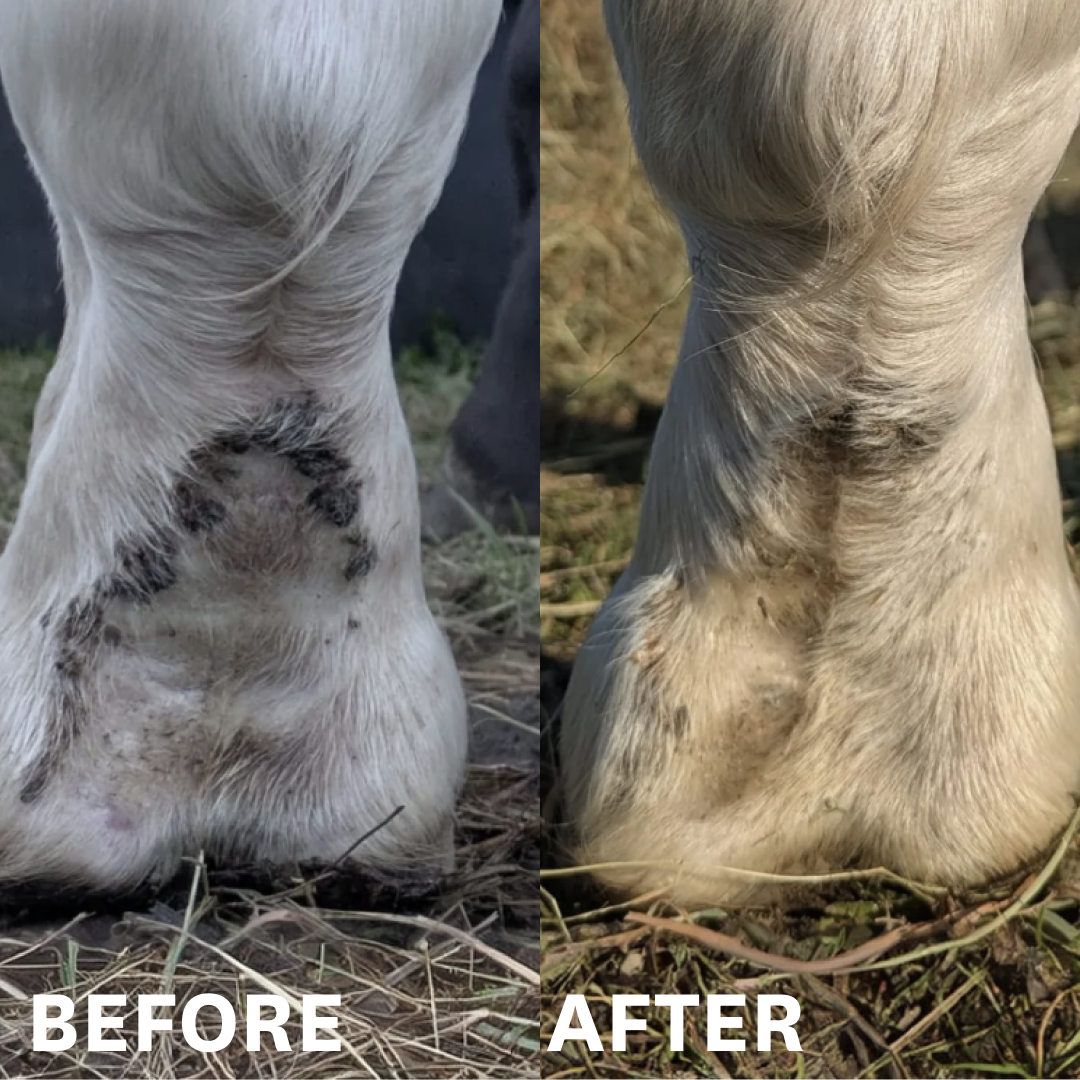
Mud Fever in Horses: Why Prevention Matters More Than Treatment
Winter is tough on equestrians, but it’s even tougher on our horses’ legs. Between the constant rain, snow, and churned-up paddocks, keeping legs dry and healthy can feel like a losing battle.
The result? The dreaded "Mud Fever" (or Scratches/Pastern Dermatitis). It’s painful for the horse, frustrating for the rider, and can sideline your training plans if it gets out of hand.
What is mud fever?
Mud fever (also known as scratches or pastern dermatitis) is a skin condition that affects the lower legs of horses, most commonly in wet, muddy conditions. Prolonged moisture weakens the skin barrier, allowing bacteria to cause irritation, scabs, and inflammation.
When we see scabs or crusty skin on a pastern, our first instinct is often to scrub it clean. But aggressively scrubbing raw, inflamed skin can actually cause more damage. It creates micro-tears in the skin barrier, driving bacteria deeper and making the infection harder to heal.
We realized the market was missing something crucial: a treatment that was tough on bacteria but gentle on skin.
When developing our first private label product, we focused on one simple question: how can we support the skin barrier instead of breaking it down?
We designed this cleanser to change the way you treat winter skin issues.
1. Remove Excess Mud: Gently hose off heavy mud or dirt.
2. Apply Generously: Spray the Foam Cleanser directly onto the affected area.
3.Let it Work: Allow the foam to sit briefly to help loosen debris and soften scabs.
4. Wipe or Rinse: Gently wipe away with a clean cloth or rinse.
5.Dry Thoroughly: This is key! Bacteria loves moisture. Always towel dry legs thoroughly before putting your horse back in the stall.
Corro
$44.99
$44.99
Regular priceNo additional content available for this product.

Sometimes, but it often doesn’t without proper care.
Mild cases of mud fever may improve if the skin is kept clean, dry, and protected. However, because the condition is closely linked to prolonged moisture and skin barrier damage, it can easily worsen or recur if those factors aren’t addressed.
Without appropriate management, mud fever can progress from superficial irritation to deeper infection, causing pain, swelling, and lameness. Early, gentle care and moisture control are key to preventing complications.
In many cases, yes, carefully and conservatively.
Thick feathers can trap moisture, mud, and bacteria against the skin, creating an ideal environment for mud fever. Lightly trimming or clipping feathers can improve airflow, make it easier to keep the area clean, and allow treatments to reach the skin more effectively.
That said, clipping should be done thoughtfully. Avoid clipping irritated skin too closely, and always ensure the area is kept clean and dry afterward to prevent further irritation.
Mud fever itself is not contagious, but the bacteria involved can spread.
Mud fever is caused by a combination of moisture, skin damage, and opportunistic bacteria already present in the environment. While one horse cannot directly “catch” mud fever from another, shared wet conditions, contaminated mud, grooming tools, or towels can increase the risk of spread.
Good hygiene (including cleaning equipment between horses and managing muddy turnout areas) helps reduce risk across the barn.
Not always, but the risk can be significantly reduced.
Because mud fever is strongly linked to environmental conditions, it isn’t always possible to eliminate the risk entirely. However, consistent preventive care can greatly reduce how often it occurs and how severe it becomes.
Key preventive measures include:
Prevention focuses less on aggressive treatment and more on protecting the skin before problems start.
If your horse dislikes metal bits or you’re teaching a young horse the basics of contact, a black hard rubber bit can be a smart choice. These bits—often made from...
Blanketing isn’t about “toughing it out” or piling on weight. It’s about comfort and consistency; and adjusting for coat, clipping, wet weather, and big temperature swings. There’s no one-size-fits-all rule,...
Winter is tough on equestrians, but it’s even tougher on our horses’ legs. Between the constant rain, snow, and churned-up paddocks, keeping legs dry and healthy can feel like a...